

How Often Should You Get Routine Blood Work?
Routine blood work is a crucial tool for proactive health management, typically recommended on an annual basis to catch potential issues early and monitor important changes in your baseline health over time. Because your ideal testing schedule depends entirely on your unique age, medical history, and individual risk factors, personalized medical guidance is essential. To determine exactly how often you need lab tests and keep your long-term wellness on track, schedule a preventive care consultation with Dr. Thomas N. Robeson, MD at Oyster Point Family Practice today. For more information, contact us or request an appointment online. We are conveniently located at 704 Thimble Shoals Blvd Suite 700, Newport News, VA 23606.
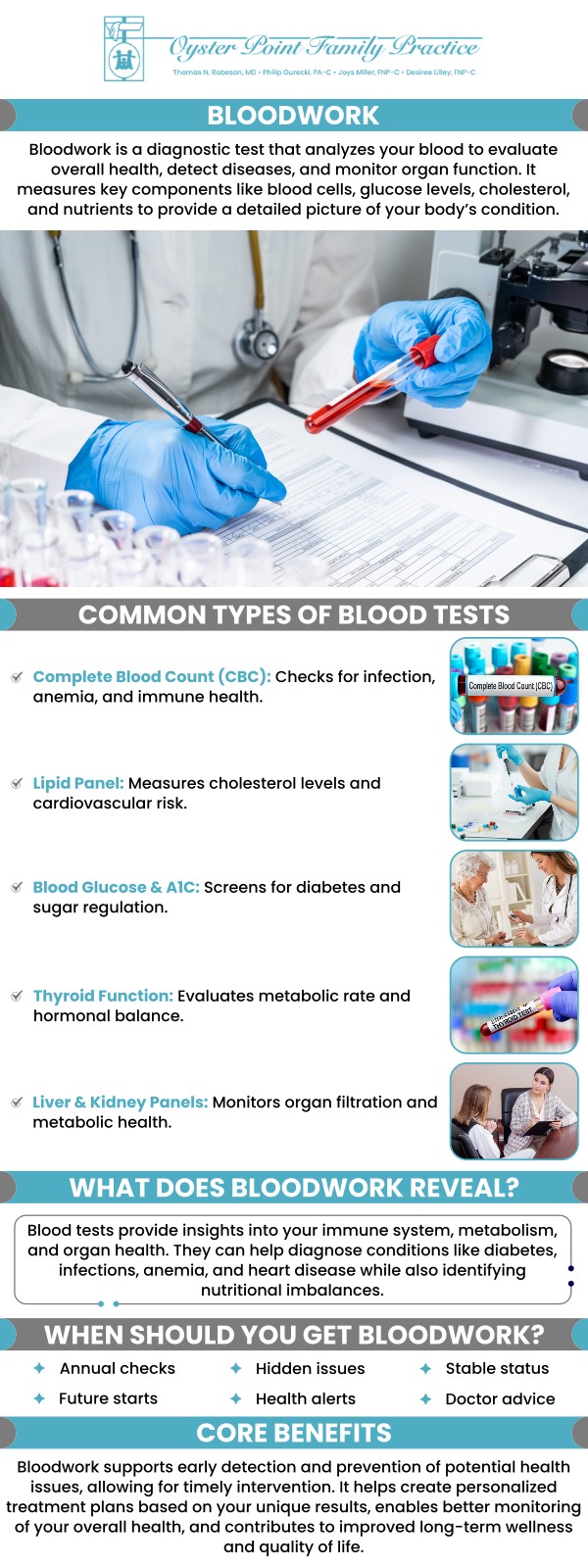
Table of Contents:
How often should people with chronic health conditions receive blood work?
Can routine blood work help monitor changes in my health over time?
How often should I get blood tests if I have a family history of certain conditions?
What routine blood tests are commonly recommended during annual health checkups?
How Does Dr. Thomas N. Robeson, MD, at Oyster Point Family Practice Support Regular Health Screenings?
The frequency of these tests depends on your specific diagnosis, the severity of your condition, medications you’re taking, and your individual health goals. Our team works closely with each patient to develop a monitoring plan that’s tailored to your unique needs.
For example:
• Diabetes: Patients often need blood tests every three to six months. These tests help us monitor blood sugar control, kidney function, and cholesterol levels to prevent complications.
• High Blood Pressure, Heart Disease, and Cholesterol Disorders: If you’re on cholesterol-lowering medications or blood thinners, regular blood work is important to ensure the medication is effective and to check for any side effects.
• Thyroid Disorders: Monitoring thyroid hormone levels is usually recommended every three to six months, especially after a medication change.
• Kidney Disease: Routine blood tests allow us to track kidney function and adjust your treatment as needed.
In some cases, if your condition is stable and well-controlled, we may recommend blood work once or twice a year. However, if you experience any changes in symptoms, medication adjustments, or if your condition progresses, more frequent monitoring might be necessary.
Regular monitoring not only helps us detect any complications early but also guides our treatment recommendations and supports your overall health.
Routine blood work is an essential part of maintaining your long-term health. By analyzing key components in your blood—such as red and white blood cell counts, hemoglobin, platelets, cholesterol, blood sugar, and markers of organ function—our healthcare providers can establish your personal health baseline. This helps us monitor your well-being at every visit.
Comparing your current lab results with your previous ones allows our team at Oyster Point Family Practice to detect subtle changes or trends that could signal early signs of conditions such as diabetes, anemia, infection, or problems with your liver, kidneys, or thyroid. By identifying these issues before symptoms appear, we can intervene sooner and manage your health more effectively.
Regular blood tests at our practice also enable us to assess how well your current treatments or lifestyle changes are working. If needed, we can make timely adjustments to your care plan, ensuring you receive the most appropriate and effective treatment.
If you have relatives with conditions such as diabetes, high cholesterol, heart disease, thyroid disorders, or certain types of cancer, our providers may recommend more frequent blood tests to monitor your health and catch any early signs of disease.
The frequency of these blood tests will be tailored to your unique needs—taking into account your family history, age, personal risk factors, and current health status. If diabetes runs in your family, we may recommend annual screenings with fasting glucose or hemoglobin A1c, especially if you have additional risk factors such as being overweight or having high blood pressure. Similarly, those with a family history of thyroid disorders might benefit from thyroid function tests every few years, or more often if symptoms arise.
For patients with a family history of certain cancers, our providers may include specific blood tests or tumor markers as part of your personalized screening plan. The frequency and starting age for these tests can vary depending on your risk factors and the latest medical guidelines.
The best way to stay proactive about your health is to discuss your family history with your Oyster Point Family Practice provider. Together, we can create a screening schedule that fits your needs and helps ensure early detection and effective management of potential health issues.
At Oyster Point Family Practice, we are committed to helping you maintain your best health through comprehensive annual checkups. As part of your wellness visit, our experienced healthcare providers often recommend a series of routine blood tests. These tests are essential tools in assessing your overall health and detecting potential medical concerns early.
One of the most common tests we perform is the complete blood count (CBC). This test evaluates key components of your blood to help identify conditions like anemia, infections, and certain blood disorders.
We also frequently order a basic metabolic panel (BMP) or comprehensive metabolic panel (CMP). These panels help us monitor your blood sugar (glucose), electrolyte and fluid balance, kidney function, and liver health. The CMP offers an even more detailed look at your liver enzymes and important proteins, providing a thorough assessment of your metabolic health.
A lipid panel is another standard blood test. This test measures your cholesterol, including total cholesterol, LDL (“bad” cholesterol), HDL (“good” cholesterol), and triglycerides. By tracking these values, we can better evaluate and help manage your risk for heart disease and stroke.
If you have symptoms of thyroid issues or a family history of thyroid disease, we may recommend a thyroid-stimulating hormone (TSH) test to assess your thyroid function. For patients at risk for diabetes, we also offer the hemoglobin A1c test, which provides a picture of your average blood sugar levels over the past two to three months.
Depending on your age, medical history, and risk factors, your Oyster Point Family Practice provider may suggest additional blood tests, such as those for vitamin D, vitamin B12, or prostate-specific antigen (PSA) for men.
These routine blood tests are vital for the early detection and management of health issues. By partnering with you, our team ensures you have the information and support you need to make informed decisions about your health.
At Oyster Point Family Practice, Dr. Thomas N. Robeson, MD, and the dedicated team prioritize regular health screenings as a vital part of comprehensive family healthcare. Serving the Newport News and greater Hampton Roads community, Dr. Robeson works closely with patients of all ages to highlight the value of routine check-ups and early detection through timely screenings. Whether you’re scheduling an annual physical or managing ongoing health concerns, he takes the time to review each patient’s unique background—including age, family medical history, lifestyle, and specific risk factors—to provide personalized screening recommendations.
Oyster Point Family Practice offers a full range of preventive evaluations, including blood pressure monitoring, cholesterol and diabetes screenings, cancer screenings, and up-to-date immunizations for children and adults. Dr. Robeson believes in open communication and patient education, ensuring that every individual understands their health status and feels empowered to make informed healthcare decisions.
Our team is committed to making the process of regular screenings as convenient and stress-free as possible. By integrating preventive care into routine visits, Oyster Point Family Practice helps patients stay proactive about their health, fostering long-term wellness for your entire family. For more information, contact us or request an appointment online. We are conveniently located at 704 Thimble Shoals Blvd Suite 700, Newport News, VA 23606. We serve patients from Newport News VA, Grafton VA, Hampton VA, Poquoson VA, Seaford VA, Carrollton VA, and surrounding areas.
Check Out Our 5 Star Reviews


Additional Services You May Need
• Annual Physicals
• Sick Visits
• Chronic Care Management
• Well Child Visits
• Women’s Health
• Blood Glucose Monitoring
• Bone Densitometer Testing (Dexa Scan)
• Pulse Oximetry Testing
• Pulmonary Function Testing
• Gynecology
• Newborn Care
• Acute Conditions
• Flu Shots
• School Physicals
• Minor Surgeries
• Chronic Conditions
• Physicals
• Covid-19 Vaccine Information
• Pre Operation Clearance Physicals
• Auto Accident Injury
• Cuts and Bruises
• Sprains & Strains
• Same Day Sick Visits
• Immunizations – Tdap
• MMR
• IPV
• Diabetes Management
• Pneumonia
• Shingrix
• Childrens Vaccines
• Walk-in Lab Services
• Women’s Physicals
• Men’s Physicals
• Sports Physicals
• PAP Smears
• COPD
• Geriatric Care
• Travel Medicine Clinic
• Osteoporosis
• Immunizations

Additional Services You May Need
• Annual Physicals
• Sick Visits
• Chronic Care Management
• Well Child Visits
• Women’s Health
• Blood Glucose Monitoring
• Bone Densitometer Testing (Dexa Scan)
• Pulse Oximetry Testing
• Pulmonary Function Testing
• Gynecology
• Newborn Care
• Acute Conditions
• Flu Shots
• School Physicals
• Minor Surgeries
• Chronic Conditions
• Physicals
• Cuts and Bruises
• Sprains & Strains
• Same Day Sick Visits
• Immunizations – Tdap
• MMR
• IPV
• Diabetes Management
• Pneumonia
• Shingrix
• Childrens Vaccines
• Walk-in Lab Services
• Women’s Physicals
• Men’s Physicals
• Sports Physicals
• PAP Smears
• COPD
• Geriatric Care
• Travel Medicine Clinic
• Osteoporosis
• Immunizations
• Covid-19 Vaccine Information
• Pre Operation Clearance Physicals
• Auto Accident Injury


 Send Text
 How May I Help You?